

If you’ve ever bought a piece of jewelry labeled “tarnish-resistant” and watched it dull within months, you’re not alone. Understanding what does tarnish-resistant jewelry mean goes beyond reading a tag. The term describes a spectrum of materials, manufacturing choices, and coatings that slow down a natural chemical process. It does not mean tarnish-proof. Knowing the difference will save you money, frustration, and a lot of confused Google searches about why your “forever” bracelet turned green.
Table of Contents
- Key takeaways
- What tarnish-resistant jewelry really means
- Why jewelry tarnishes in the first place
- How tarnish-resistant jewelry is made
- Tarnish-resistant vs regular jewelry
- Caring for tarnish-resistant jewelry
- What to look for before you buy
- My honest take on tarnish-resistant jewelry
- Jewelry that lasts as long as the moment it marks
- FAQ
Key takeaways
| Point | Details |
|---|---|
| Tarnish-resistant is not tarnish-proof | The term describes slowed tarnishing, not permanent immunity, depending on materials and coatings used. |
| Plating thickness matters most | Thicker plating, such as vermeil at 2.5+ microns, dramatically extends how long jewelry holds its shine. |
| Base metal determines longevity | Solid gold and platinum resist tarnish naturally; plated pieces rely on coating integrity to stay bright. |
| Storage and care extend life | Anti-tarnish strips and sealed pouches can double the wearable lifespan of your favorite pieces. |
| Ask before you buy | Request plating thickness specs and quality testing data before purchasing any tarnish-resistant piece. |
What tarnish-resistant jewelry really means
The industry term you’ll hear alongside “tarnish-resistant” is corrosion-resistant, and the two overlap more than most people realize. Tarnish is a surface-level chemical reaction. When certain metals meet oxygen, moisture, sulfur compounds, or acids from your skin, they oxidize and discolor. That dull gray film on silver? That’s silver reacting with hydrogen sulfide in the air around you.
Tarnish-resistant jewelry uses specific metals, coatings, or manufacturing techniques designed to slow that reaction significantly. The key word is slow. A piece labeled tarnish-resistant will hold its color longer than standard plated brass, but it is not immune to its environment forever. What is tarnished jewelry, exactly? It’s any piece where that chemical reaction has visibly altered the surface color, often showing as yellowing, darkening, or a green tinge on skin.
Here’s what most buyers don’t know: the label itself means nothing without the manufacturing data behind it.
Why jewelry tarnishes in the first place
Before you can appreciate what makes a piece resistant, you need to understand what it’s resisting. Tarnish is not dirt. It’s a chemical transformation of the metal’s surface layer.
The main culprits behind tarnishing include:
- Sulfur compounds in air and water. Hydrogen sulfide reacts with silver and copper to form dark sulfide compounds on the surface.
- Moisture and sweat. Your skin’s natural oils and acids accelerate oxidation, especially on reactive metals like brass and copper.
- Skin pH. People with more acidic skin chemistry see faster tarnishing on susceptible alloys. Acidic skin and sweat accelerate tarnish on copper-based metals significantly.
- Chlorine and harsh chemicals. Pool water, cleaning products, and even some perfumes strip plating and trigger rapid oxidation.
- Air pollution. Indoor environments with gas appliances or industrial air have elevated sulfur levels that speed up tarnish on silver and plated pieces.
- Storage conditions. Leaving jewelry exposed on a dresser in a humid bathroom is one of the fastest ways to dull a piece that would otherwise last years.
Common metals prone to tarnish include silver, copper, and brass. Gold and platinum sit at the other end of the spectrum because they are chemically stable and non-reactive under normal conditions.
How tarnish-resistant jewelry is made
This is where the real story lives. True tarnish resistance requires a system approach, not just a single coating. Think of it like layers of protection working together.
Here’s how quality manufacturers build tarnish resistance into a piece:
- Choose the right base metal. Sterling silver is a better base than brass or copper because it is less reactive. Solid gold and platinum need no help at all since they are naturally non-reactive.
- Apply a barrier layer. Between the base metal and the outer plating, a nickel or palladium barrier prevents chemical migration from the base metal to the surface.
- Plate with sufficient thickness. Plating thickness ranges from 0.5 to 5 microns, and thicker plating directly translates to longer wear before the base metal is exposed. Vermeil standards require at least 2.5 microns of gold over sterling silver, which is why vermeil outperforms standard gold-plated pieces.
- Add a protective topcoat. Anti-tarnish sealants create a moisture barrier and reduce the impact of skin acids. Protective topcoats extend plating life but cannot compensate for thin plating underneath.
- Verify with quality testing. Reputable manufacturers use XRF (X-ray fluorescence) analysis to confirm plating thickness. XRF can detect plating layers as thin as 0.01 microns, making it the gold standard for verifying durability claims.
Another material worth knowing: 316L stainless steel. It contains chromium, which forms a self-healing oxide layer on the surface, and molybdenum, which protects against saltwater and sweat corrosion. 316L stainless steel maintains its shine in daily wear for years without plating at all. When paired with PVD (Physical Vapor Deposition) coatings, it becomes one of the most durable options available.
Pro Tip: Ask any jewelry brand for their plating thickness in microns before buying. If they can’t tell you, that’s your answer about quality.
Tarnish-resistant vs regular jewelry
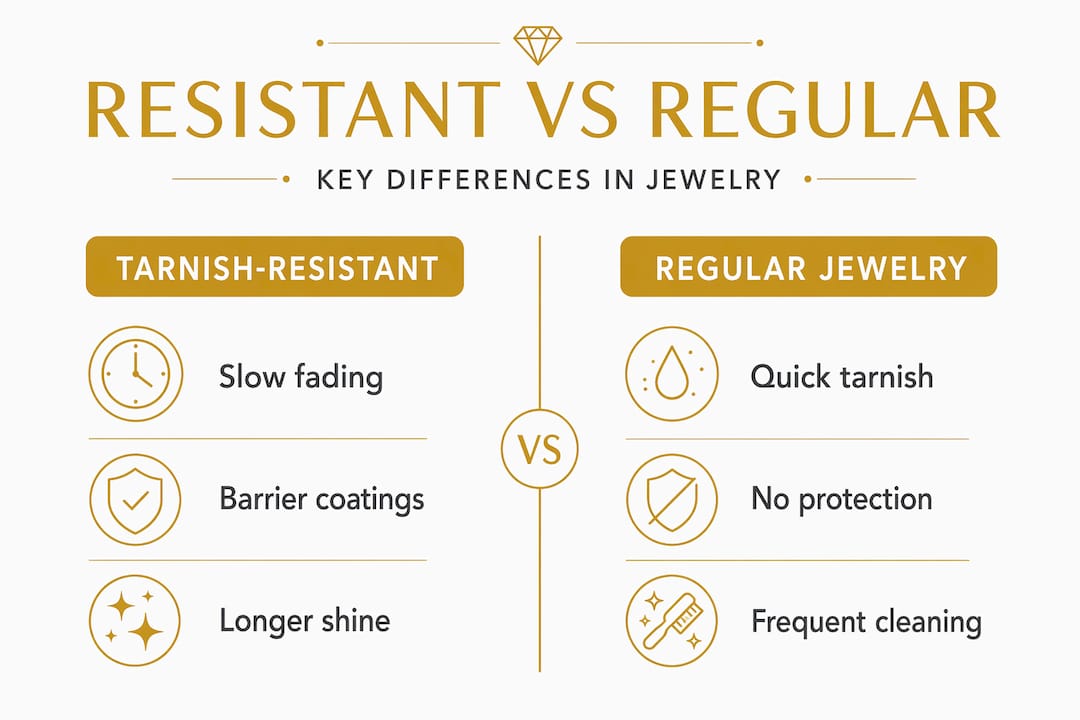
The practical difference between tarnish-resistant and regular jewelry shows up in daily life, not in a description box.
| Metal Type | Tarnish Resistance | Hypoallergenic | Best For |
|---|---|---|---|
| Solid gold (14K/18K) | Excellent, naturally non-reactive | Yes | Everyday wear, long-term investment |
| 316L stainless steel | Excellent, self-healing chromium layer | Yes | Active lifestyles, water exposure |
| Gold vermeil | Good, thick plating over sterling silver | Yes (sterling base) | Elegant daily wear, sensitive skin |
| Gold-plated brass | Moderate, depends on plating thickness | No (brass can irritate) | Occasional wear, budget-friendly |
| Brass or copper | Poor, tarnishes quickly | No | Fashion pieces, short-term wear |
Only solid gold jewelry is genuinely tarnish-free in the truest sense. Everything else involves a tradeoff between price, durability, and maintenance. Plated pieces will eventually expose their base metal as the coating wears through, and that’s when tarnish “bleeds” to the surface.
The benefits of tarnish-resistant jewelry over standard plated pieces are real, though. You get longer color retention, less skin discoloration, and often better hypoallergenic performance. 316L stainless steel is surgical grade and does not leach nickel, making it a strong choice for sensitive skin.
Pro Tip: Check for PVD coating on stainless steel pieces. PVD creates a bond at the molecular level, making it far more scratch-resistant and longer-lasting than traditional electroplating.
Caring for tarnish-resistant jewelry
Even the best tarnish-resistant piece needs thoughtful care. Here’s how to keep it looking its best:
- Clean gently and regularly. Use a soft cloth and mild soap with warm water. Avoid abrasive materials that scratch the surface coating.
- Dry completely before storing. Moisture trapped against metal accelerates tarnish, even on resistant pieces.
- Store in sealed pouches or airtight containers. Anti-tarnish strips absorb hydrogen sulfide and protect silver and plated metals effectively. Replace them every three to six months.
- Remove jewelry before swimming, showering, or exercising. Chlorine and sweat are two of the fastest ways to wear through plating.
- Keep perfume and lotion away from your jewelry. Apply these products first, let them dry, then put on your jewelry.
- Know when to re-plate. If you notice color fading or skin discoloration, it’s time to visit a jeweler for professional re-plating rather than letting the base metal continue to oxidize.
Learning how to clean tarnish-resistant jewelry properly is one of the most underrated investments you can make in your collection. A piece that’s cleaned and stored well can last years longer than the same piece neglected in a bathroom drawer.
Pro Tip: Wrap individual pieces in anti-tarnish tissue before placing them in a sealed pouch. The combination works better than either method alone.
What to look for before you buy
Buying tarnish-resistant jewelry with confidence means asking the right questions before you hand over your money. Here’s a practical checklist:
- Ask for the base metal. Sterling silver, solid gold, and 316L stainless steel are the most reliable foundations for tarnish-resistant pieces.
- Request the plating thickness in microns. Anything under 1 micron is a short-term piece. Vermeil at 2.5 microns or above is a meaningful standard.
- Look for brands that disclose their manufacturing process. Transparency about barrier layers, topcoats, and quality testing signals a brand that stands behind its product.
- Ask about testing methods. Tarnish-resistant claims need verification through XRF, salt spray, and sweat simulation testing. Brands that conduct these tests will tell you.
- Evaluate the warranty. A meaningful tarnish-resistance guarantee is backed by a real warranty, not just a marketing phrase.
- Balance price with expected lifespan. A $30 gold-plated brass ring and a $150 gold vermeil ring are not the same investment. Know what you’re buying and what you can reasonably expect from it.
Measuring plating thickness via XRF helps prevent misleading claims about gold content and tarnish resistance. Brands that invest in this testing are the ones worth trusting.
My honest take on tarnish-resistant jewelry
I’ve spent years looking closely at how jewelry is made and what actually holds up in real life. Here’s what I’ve learned that most buyers never hear.
The phrase “tarnish-resistant” is doing a lot of heavy lifting in the jewelry industry, and most of the time, it’s not earning it. I’ve seen beautiful pieces with impressive marketing that wore through in three months because the plating was under one micron thick with no barrier layer underneath. The system approach to manufacturing that genuine tarnish resistance requires is expensive and time-consuming. Most brands skip steps.
My honest opinion: solid non-reactive metals are still the best long-term choice. Solid gold 14K stud earrings don’t need barrier layers or topcoats because they don’t react. That’s a different category entirely from plated pieces, regardless of how good the plating is.
That said, high-quality vermeil and PVD-coated stainless steel are genuinely impressive when made correctly. The gap between a well-made vermeil piece and a poorly made one is enormous. Buyer education is the real answer here. When you know what to ask for, you stop paying for marketing and start paying for materials.
— Tony
Jewelry that lasts as long as the moment it marks
When you find a piece that holds its shine through daily life, it stops being just an accessory. It becomes part of your story.

At Glamourjewelryhouse, every piece is built with that kind of longevity in mind. Their handcrafted 18K gold jewelry uses a sterling silver base with a gold layer that’s 5x thicker than industry standard, meeting and exceeding vermeil requirements. That means less tarnishing, less skin irritation, and more years of wearing something that actually means something to you. Their personalized evil eye necklace is a beautiful example of what thoughtful craftsmanship looks like: hypoallergenic, elegant, and made to last. With a 2-year warranty and over 21,000 five-star reviews, Glamourjewelryhouse backs every piece with real confidence. → Explore the full collection and find something worth keeping.
FAQ
What does tarnish-resistant mean in jewelry?
Tarnish-resistant jewelry uses specific metals, plating thickness, and protective coatings to slow the chemical reaction that causes discoloration. It does not mean the piece will never tarnish, only that it will resist tarnishing significantly longer than standard jewelry.
Is tarnish-resistant jewelry worth it?
Yes, when it’s made correctly. Pieces with verified plating thickness, barrier layers, and quality base metals like sterling silver or 316L stainless steel offer meaningful durability advantages over standard plated jewelry, making them worth the higher price.
How do I identify quality tarnish-resistant jewelry?
Ask for the base metal, plating thickness in microns, and whether the brand conducts XRF or salt spray testing. Vermeil pieces with 2.5+ microns of gold over sterling silver and PVD-coated stainless steel are reliable indicators of genuine tarnish resistance.
How do I clean tarnish-resistant jewelry safely?
Use a soft cloth with mild soap and warm water, then dry completely before storing. Avoid abrasive cleaners, chlorine, and perfume contact. Store in a sealed pouch with an anti-tarnish strip for best results.
What is the difference between tarnish-resistant and tarnish-free jewelry?
Tarnish-free jewelry, typically solid gold or platinum, does not tarnish because the metal itself is chemically stable. Tarnish-resistant jewelry slows tarnishing through coatings and plating but can still discolor over time if those layers wear through.
Recommended
- Personalized & Handcrafted 18K Gold Jewelry – Glamour Jewelry House
- Fish Necklace | Gold Ichthys Christian Fish Pendant | 18K Gold | Faith Subtle Christian Symbol Birthday Gift – Glamour Jewelry House
- Star Diamond Necklace | Dainty Gold Celestial Pendant with CZ Stone | 18K Gold | Anniversary Sisterhood Gift – Glamour Jewelry House
- Silver Snake Chain Necklace | Flat Snake Link Chain | 18K Gold | Daily Wear Refined Birthday Gift for Her – Glamour Jewelry House


